이 리뷰는 아직 번역되지 않았습니다 — 원문(English)을 표시합니다.
A kung-fu master prepares for a fight. He stands in his stance, waiting. Then he wins or falls. Yie Ar Kung Fu isn't a game for long storytelling — it's a pure test of reflexes, one that I had no wish to take on at my PC in the nineties.
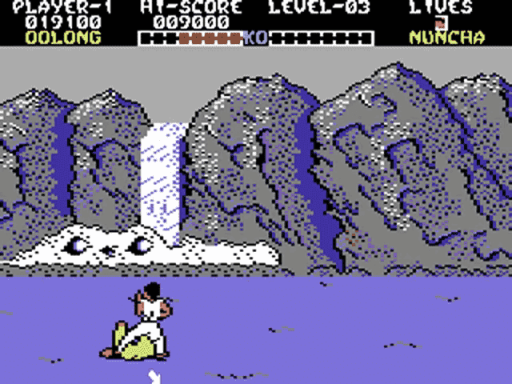
It's a simple thing — progress through a series of opponents with rising abilities. Each has their own move, rhythm and weakness. You have to learn when to block, when to attack and when to jump. There is no plot, no story — just you and a chain of enemies who get progressively nastier. The game takes everything you've got.
The controls are hard. Key presses correspond to punches and blocks, and movement is discrete, not smooth. That isn't a flaw, it's intentional — every press has to count, you can't just button-mash. One wrong move and your opponent puts you down. The middle stages are brutal, the pace ruthless. The graphics are pixelated and the sounds are thin, but it is exactly this almost monastic restraint that makes the game intense. There are no effects to distract you. There is only the basic math — your time versus his time.
Yie Ar Kung Fu was groundbreaking in the mid-eighties — it was one of the first arcade beat-'em-ups to make its way onto home computers. Today its remnant sounds like a distant predecessor of all the fancier button-pressing dances. The game has aged badly in one respect — needless passivity. You can't do anything on your own, you have to wait until the opponent moves. In 1985 that was interesting, but in the nineties it was a bit of a bore.
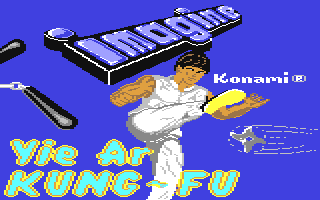
It's fitting to experience it today for precisely that reason. It isn't a game for fun, it's an artifact — a testimony to an era when the computer player was learning that not everything has to be in motion. The strength is in calm, in quiet waiting. In an emulator you'll get through it in a few minutes. You doze off on it while better things exist. But this thing may surprise you — how much it irritates you when you don't know what is going to happen next.
 old

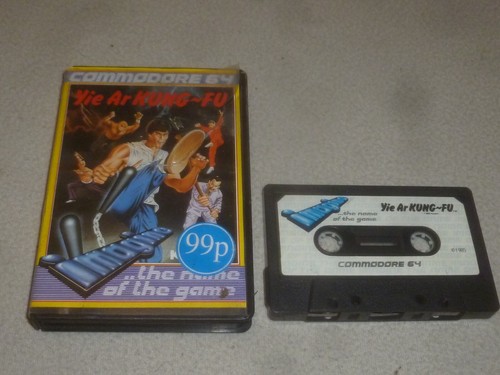 Yie Ar Kung Fu 팬을 위한Commodore 64 128 PC Complete Game Vintage Cassette Tape YIE AR Kung FU Chan LEEeBay에서 보기 »
 Yie Ar Kung Fu 팬을 위한Konami Yie Ar Kung-Fu FamicomeBay에서 보기 »
 Yie Ar Kung Fu 팬을 위한Yie Ar Kung-Fu Nintendo Family ComputereBay에서 보기 »
 Yie Ar Kung Fu 팬을 위한" YIE AR Kung-fu " Famicom NES FC Konami Boxed Family ComputereBay에서 보기 »

 ▶Star Wars1988MS-DOS / PC


