Ova recenzija još nije prevedena — prikazujemo izvornik (English).
I remember that feeling when I first saw the screenshot in Excalibur. Pixel art so dense and detailed that I couldn't believe it ran on my 386. Gods by Bitmap Brothers, 1991 — and that game looked different from everything else.
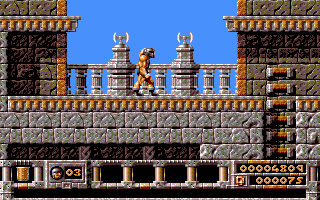
Bitmap Brothers were hardly unknowns back then. Speedball 2, Xenon 2 — those guys had style like no one else in the business. Gods is an action platformer where you play as a mortal warrior trying to earn a place among the Olympic gods. The world is full of temples, traps, enemies and secret rooms. No deep philosophy, but that premise gives the game the right atmosphere — pompous, a bit mythical, a bit cold.
Gameplay rests on exploration and reflexes. You move through levels, collect keys, unlock doors, eliminate monsters and search for hidden switches. The game has a merchant system where traders sell you equipment between enemy waves — a solid idea for 1991. Controls on PC were a bit tougher than on the Amiga, where the game originally came from, but you could get used to them. What couldn't be forgiven was enemy trap placement. Some sections feel like the level designer had a bad day and decided to share it with the player.
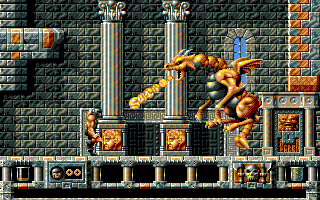
What Gods brought above all was visual impact. That characteristic Bitmap Brothers look — dark palettes, detailed tiles, smooth animations — looked stunning back then and in many ways still looks dignified today. The music did more than just play in the background; it was part of the atmosphere. The game aged acceptably, but its difficulty is in places treacherous in a way that feels more frustrating than challenging by today's standards. Don't expect save states in the modern sense.
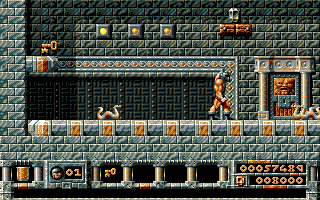
Today Gods suits anyone who wants to feel what a premium action game from the early nineties looked like — before Doom, before the PC became the dominant platform and the Amiga started losing its breath. Play it in your browser for an hour or two, soak up that atmosphere and appreciate how much work it took back then to make a game that simply looked good. That was craftsmanship in itself.
 old
old


 ▶Doom1993MS-DOS / PC


 ▶Contra1988MS-DOS / PC
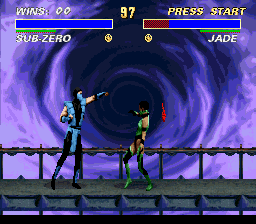 ▶Ultimate Mortal Kombat 31996Super Nintendo