این نقد هنوز ترجمه نشده است — متن اصلی (English) را نشان میدهیم.
I remember the feeling when I first saw Where Time Stood Still's isometric perspective on a monitor with an orange phosphor glow. It wasn't cinema, it wasn't a comic book — it was something in between, and in 1987 it was unusual enough to make you stop and stare.
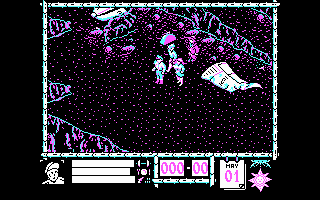
Dentons released this game a year before their name became known thanks to Escape from the Planet of the Robot Monsters. Where Time Stood Still is an action adventure with an isometric view that follows a group of survivors trapped in an isolated, time-forgotten world — a place where nature took a different path and civilization simply never arrived. Prehistoric survival avant la lettre, before it was even a genre.
The player controls one character and the rest of the group follows like a chain. This is where both the game's strengths and its main frustrations begin. Your companions are stupid in a way that goes beyond adorable — you can happily watch them walk straight into danger because the pathfinding just can't keep up. The environment must be explored carefully, supplies are consumed, threats are real. This isn't action where you hack your way forward; it's careful balancing on the edge of survival, which works better than you'd expect from 1987.

What holds the game up even today is its atmosphere. The world feels believably abandoned, the art style has its own internal logic, and that isometric perspective gives the space a depth that many contemporary games lacked. What has aged poorly, however, is precisely the controls — moving the group requires a patience that has since been gentrified into "retro difficulty." Simply put: the game doesn't punish you for carelessness, it punishes you for moving.
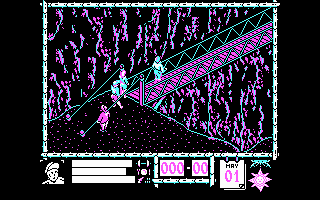
Today Where Time Stood Still will appeal to those who can appreciate context. Not as a thrilling action game, but as proof that someone in Britain in the mid-eighties was thinking about interactive storytelling differently than the rest of the market. It's worth trying in a browser — at least for the first twenty minutes, while you're still amazed at how well it works. Then the pathfinding kicks in and you'll understand why most people don't remember it as fondly as the developers probably hoped.
 old


 ▶Muppet Treasure Island1996MS-DOS / PC


 ▶Bubble Bobble - The Adventure1993ZX Spectrum


