این نقد هنوز ترجمه نشده است — متن اصلی (English) را نشان میدهیم.
Pac-Man returns, but this time without the panic. Super Pac-Man from the late eighties is a logical and strategic game that will consume your time far longer than the original arcade. Here, you can't just hammer the joystick and shoot your way out.

You're still a yellow circle in a maze, but now with ambition. The goal is simple: collect all the keys on the level and open the exit. Instead of being chased by one ghost after another, this time you have more space and time to think. The maze is bigger, the keys are placed strategically, and the ghosts pursue you, but they're not desperately aggressive. The game tapped into puzzle logic principles and moved away from pure reflexes.
Controls remain the same — arrow keys or joystick, movement in one of eight directions. But the game pace is slower, which gives you room to plan. You figure out which way to go to collect the keys in the ideal order and avoid the ghosts without them popping up at the worst possible moment. No mercy here — one touch from a ghost and it's over. But you have time to think, not just react. That's the difference between old Pac-Man and this one. More comfortable, but also more embarrassing — when you fail, I know you didn't believe in yourself.
Throughout the eighties, logic games and puzzles became an alternative to arcade fever. Super Pac-Man had the bad luck of being released on Chinese PCs when the arcade west was already ending and home computers were preparing for a wave of roguelikes and graphic adventures. It didn't leave much of a mark, even though the idea wasn't bad. Today we remember it more as a curiosity — what if Pac-Man never rushed.

If you want to play something between pure reflex and a mathematical puzzle, I'm here for you. The setting stays familiar, but your brain will engage. You can play it in a browser without problems, and if we bore you, you don't owe anything.
 old


 ▶Teenage Queen1988MS-DOS / PC


 ▶Mario is Missing!1992MS-DOS / PC


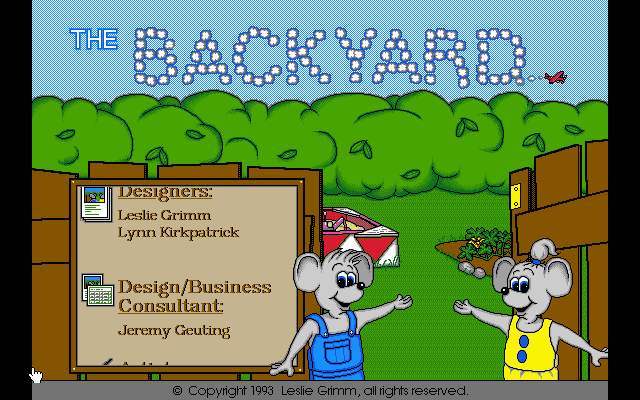 ▶The Backyard1993MS-DOS / PC


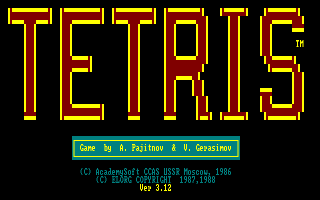 ▶Tetris1985MS-DOS / PC

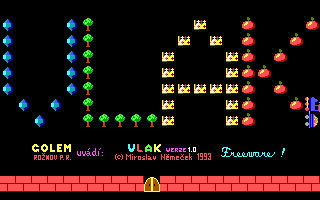 ▶Vlak1993MS-DOS / PC

 ▶Boulder Dash1984MS-DOS / PC


 ▶Supaplex1991MS-DOS / PC

 ▶Sokoban1984MS-DOS / PC
