این نقد هنوز ترجمه نشده است — متن اصلی (English) را نشان میدهیم.
The triangle listens. That's the first thing you notice about Starion, and honestly, it's almost everything that matters. David M. Webb's 1985 ZX Spectrum shooter doesn't apologize for its wireframe minimalism—it leans into it, betting everything on one thing: your ship does exactly what you tell it to do, no lag, no drift, no excuses.
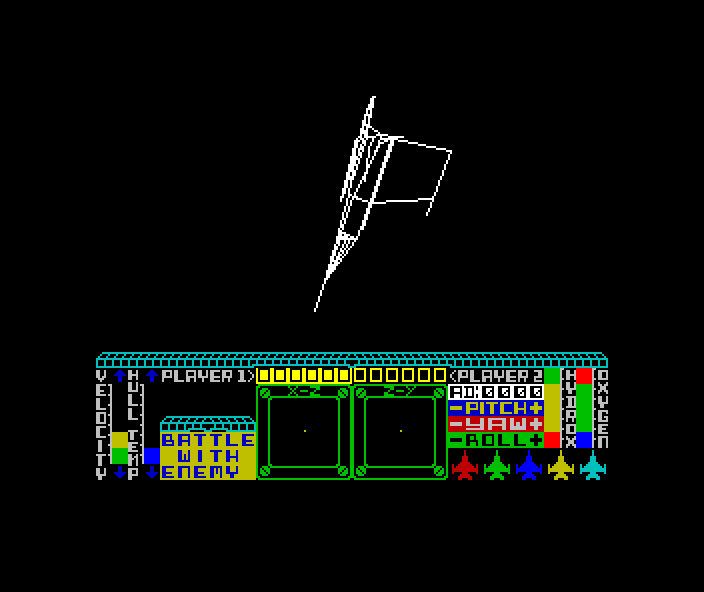
You're piloting a geometric wedge across a black void, rotating and thrusting through waves of equally simple enemies. They spawn from the left edge, move in predictable patterns, and you're meant to intercept them with your gunfire before they overwhelm you. There's no story, no narrative flourish. Just you, the void, and a constantly escalating problem that requires faster thinking and quicker reflexes. The scoring system rewards aggressive play—you need to stay close, stay moving, stay shooting.
What makes Starion work isn't the visuals; it's the responsiveness. On a 1985 Spectrum, that was a genuine achievement. The controls are tight enough that when you die, you know it's your mistake, not the game's. Your ship turns cleanly, accelerates immediately, and fires the moment you press the button. This directness is the entire game. Without it, Starion would be utterly forgettable. With it, there's a strange, hypnotic rhythm to survival.
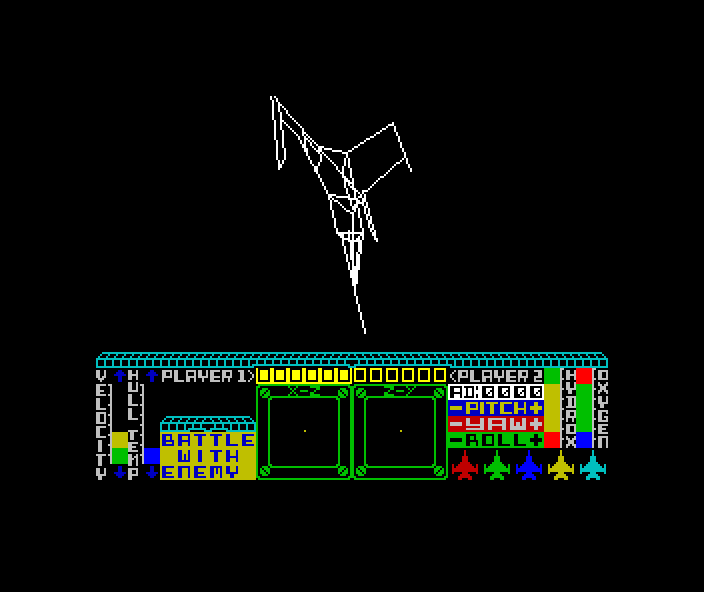
The simplicity is both its strength and its ceiling. After twenty minutes, you've seen everything the game has to offer. The difficulty ramps, the enemy patterns become more chaotic, but there's no progression, no new mechanics, no twist. It's purely about score chasing and personal bests. That worked fine for arcade players in arcades, where you fed coins and walked away. On a home computer, the appeal has a shorter shelf life.
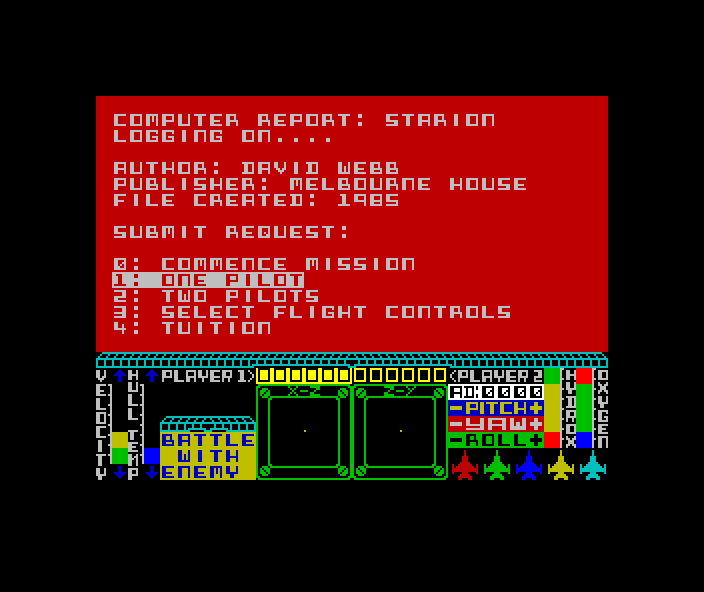
Starion belongs to a specific moment—when developers realized that raw processing power mattered less than tight input response and clear design intent. It's not a forgotten masterpiece, but it's honest work. If you're the type who still boots up Asteroids or Battlezone and finds the geometry compelling, Starion deserves fifteen minutes of your time. It won't change your life, but it won't waste it either.
 old

 ▶Tanks1983ZX Spectrum
 ▶Star Wars III - Return of the JediZX Spectrum
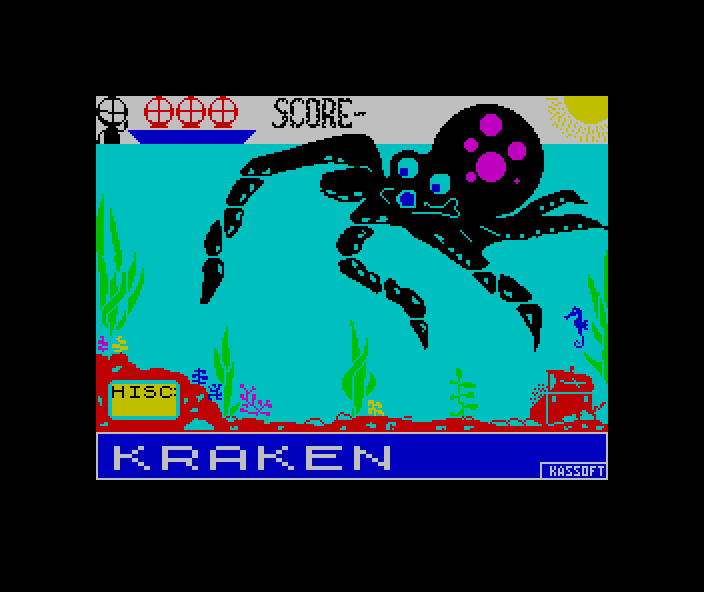 ▶KrakenZX Spectrum

 ▶3D Star Wars1983ZX Spectrum
 ▶Alien Kill1994ZX Spectrum
 ▶The Way of the Exploding Fist1985ZX Spectrum

 ▶Silkworm1989ZX Spectrum
 ▶Babaliba1984ZX SpectrumGalaxians▶Galaxians1983ZX Spectrum


