این نقد هنوز ترجمه نشده است — متن اصلی (English) را نشان میدهیم.
When I fired up Sorry! in DOSBox, I expected a classic board game adaptation from the company that invented the board game of the same name. Instead, I found myself at a computer that reminded me more of other, more interesting titles from that era. The game is based on the original board game from the fifties, where players race from start to finish and try to knock each other out of the game using card actions.
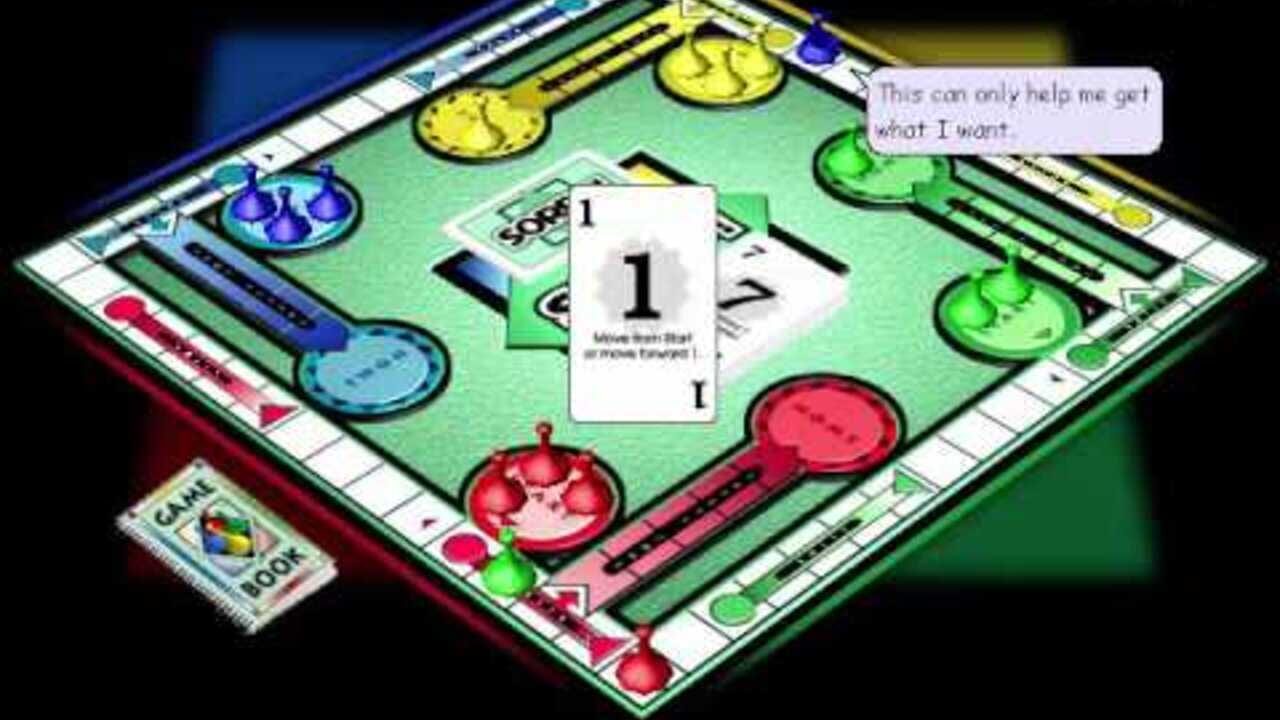
Sorry! in computer form is exactly what you'd expect — a digital adaptation of a board game for one to four players. You play against the computer or with friends at a single keyboard. Turn-based system: draw a card, move your piece according to the instructions, capture your opponent's pieces, and try to reach the goal first. Nothing complicated, nothing outright bad. Just ordinary.
But here's the catch. The graphics are washed-out yellows with minimal animations, the sound is limited to beeps when you take a turn, the controls work but lack elegance. The computer opponent isn't treacherous — it plays by the rules without artificial handicaps, which is more of a shame than a benefit. It lacks the personality that would turn a mechanically correct game into an enjoyable duel. The nineties were full of better digital adaptations of well-known board games. You're just fine playing Sorry! physically with your family — you won't miss anything here.

It plays smoothly, without slowdowns, without bugs. It's just not a reason to play it on a computer instead of on paper with real people. As a board game simulator it works, as entertainment it falls short. The algorithm of computer players does what it's supposed to do, but it doesn't create an atmosphere where you'd actually argue with someone about tactics.

Today? If you want to play Sorry! without the physical board, emulators or web versions will do it again. It would be like looking at a photo from vacation instead of actually enjoying it. The game has been preserved in MS-DOS as a time artifact — solid, but pointless.
 old


 ▶Sid Meier's Civilization1991MS-DOS / PC


 ▶Chess1998Sega Mega Drive


