این نقد هنوز ترجمه نشده است — متن اصلی (English) را نشان میدهیم.
Pachisi is a board game you play on a computer screen against the computer. A dotted game board with squares, four players in the corners, a die — a classic that was already being played in India. The computer digitalized it in 1989, when an IBM-compatible computer was still a valuable possession and people didn't mind when graphics looked like a sharpened pencil on 320 × 200 resolution monitors.
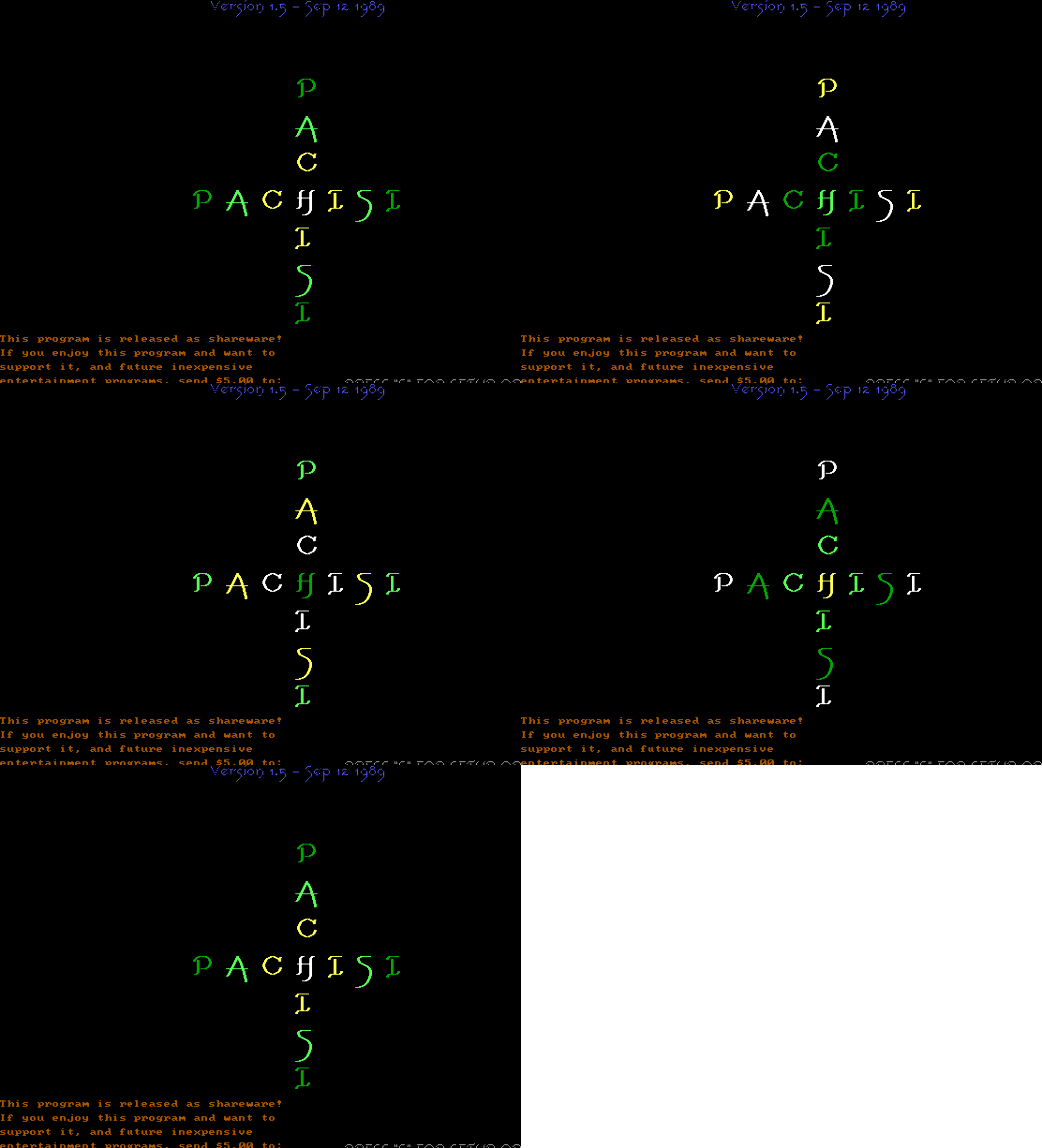
The game is simple — you roll the die, your piece moves forward by the corresponding number of squares, and you aim to get all four pieces from your home field to the center of the board. If you roll a six, you roll again. If you land on an opponent's square, their piece goes back to the start. There's nothing complicated about it, and that's precisely why it's a classic. The computer takes three pieces, you take one. Play happens in turns.
The controls are primitive — press Enter, wait for the computer to roll, your piece moves automatically. Graphics like pencil on paper. No animations, no chatter. Just numbers and squares. Sound? There isn't any. A quiet, spare affair you can play at your desk between work. The game runs smoothly, without unnecessary drama. Success depends mainly on luck and time — how long it takes before you beat all three computer opponents.
Pachisi from 1989 isn't a game you play for thrills. It's a digital transformation of something that's been working on paper and cardboard for thousands of years. The computer didn't improve it, just made it more accessible. In the nineties, when the internet was rare and gaming meant either single-player or modem play, Pachisi was a way to play against someone without a physical opponent. Today you play it for nostalgia, not in hope it will surprise you. You observe the graphics like an old friend you haven't seen in ages.
Who will take it today? Those who want to return to the original version of this type of game. Those who love simplicity without decoration. Pachisi in a browser or emulator is quiet, slow, and without any effects. Exactly as a classic Pachisi should be. Die, squares, and waiting. Nothing more is expected.
 old






 ▶Arkanoid1988MS-DOS / PC

 ▶Chess1998Sega Mega Drive
 ▶Boulder Dash III1986ZX Spectrum


