این نقد هنوز ترجمه نشده است — متن اصلی (English) را نشان میدهیم.
Year 1993, Sound Blaster humming away, and the lunar surface slowly rendering on the monitor. Lunar Command by Wesson International is one of those games I once booted from a floppy disk with the feeling that I was doing something serious — not as a moon base administrator, but as an engineer who had to make this project survive.
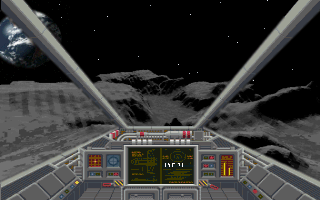
The game puts you in the role of a colony manager on the Moon. Your goal is to build and keep a human settlement alive in an environment that doesn't care much for you. No air, no running water, meteorites falling wherever they please. The setting borrows from the era's sci-fi optimism of the sixties — that dream of thriving cities under domes — and transplants it into the management simulator genre.
The mechanics are what games of this kind lived and died by in the first half of the nineties: spreadsheets, resource consumption overviews, decisions with delayed consequences. You build modules, stock the crew, handle emergencies. The pace is slow, focused. Controls are purely mouse and keyboard in the spirit of DOS-era standards — no flashy graphics, menus fitted to low resolution. That doesn't excuse the game, but it doesn't kill it either. It's fun when things start to fall apart and you're left with three crew modules and four days of oxygen to solve what was overlooked thirty game hours ago.
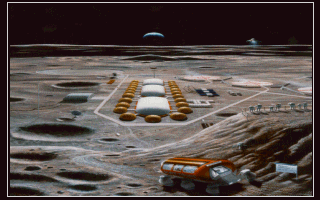
What I remember about it and what sets it apart from generic fare is the atmosphere of dread, encoded not in jump scares but in numbers. Supplies dwindle. Supplies always dwindle. Lunar Command wasn't a genre pioneer — SimCity and its offspring did resource management better and more spectacularly — but it had focus. One environment, one problem, no side quests. Today that would be called "single-concept design". Back then it was simply what fit on a floppy. What's aged less gracefully is the documentation and feedback — the game doesn't always clearly tell you why the colony died. You figure it out afterwards, if at all.
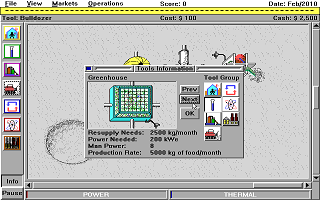
Today Lunar Command suits anyone who loves simulators with pull hidden beneath an unglamorous shell. It's not a game for visual spectacle or narrative. It's a game for someone who sat in front of a monitor in 1993 and found satisfaction in a system working — or discovering why it didn't. In a browser via DOSBox emulators it runs without a hitch, and an hour with it is an honest enough reminder of what management sims looked like before UI enhancements and five-screen tutorials buried them.
 old


 ▶Pinball Fantasies1992MS-DOS / PC
 ▶Windows 95 in the BrowserMS-DOS / PC

 ▶Free Croatia (DOS game)MS-DOS / PC


 ▶NHL '941993MS-DOS / PC
