این نقد هنوز ترجمه نشده است — متن اصلی (English) را نشان میدهیم.
BioForge, released in 1995, came out of Origin Systems — the studio behind Ultima and Wing Commander — with Electronic Arts publishing. It stands as one of the mid-nineties' most ambitious attempts to make a game feel cinematic without resorting to filmed video.

You wake as a partly mechanised being with no memory, locked in a cell inside a prison complex, and have to piece together who you are and what was done to you. The story is carried not by conversation but by exploring rooms and reading recovered logs. That is the game's strongest element — information accumulates slowly and the atmosphere stays uncomfortably claustrophobic throughout.
Play mixes adventure with third-person action. The character uses what is now called tank control: turning and walking rather than steering directly, with fixed camera angles per room. Combat is slow, heavy and dependent on timing. This was normal practice in 1995 but today it is the biggest barrier to entry — the game insists you adapt to its rhythm rather than the other way round.
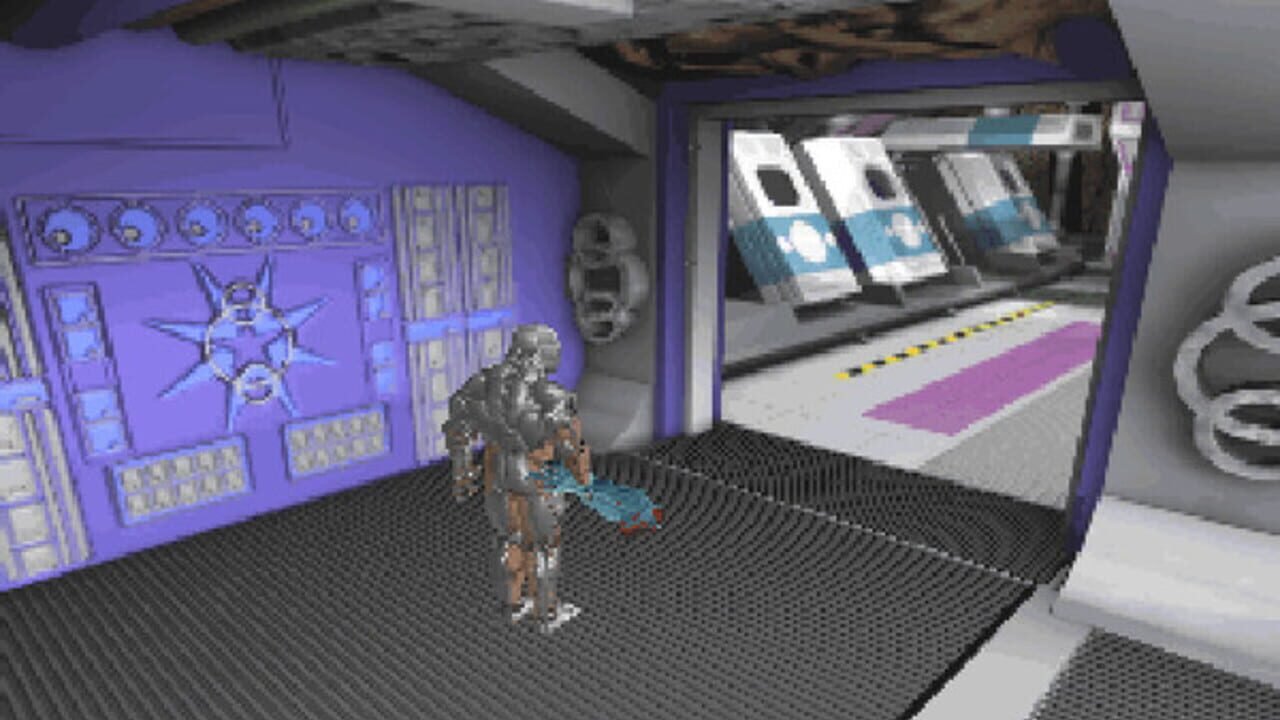
Technically BioForge was among the most demanding titles of its year. Detailed character animation, digitised audio and extensive text meant an installation measured in hundreds of megabytes, which in 1995 was exceptional. It shipped on CD and even then had to be trimmed back from its original scope.

This is a single-player experience: slow, grim and very particular in taste. Anyone after action will be disappointed; anyone drawn to science fiction atmosphere built out of small details will find something that the nineties catalogue rarely repeats.
 old
old


 ▶Fantasy - An Adult Game1987ZX Spectrum
 ▶Leisure Suit Larry 6 - Shape Up or Slip Out1993MS-DOS / PC


 ▶Amazing Spider-Man1989MS-DOS / PC