The wrestler on screen doesn't move like he's made of flesh. He's a collection of rectangles that lumber forward with all the grace of a filing cabinet being shoved down a hallway. That's Rock'n Wrestle, Aackosoft's 1985 take on the wrestling game for Commodore 64—a title that emerged from the Australian scene through Mindscape and landed somewhere between novelty and genuine curiosity.
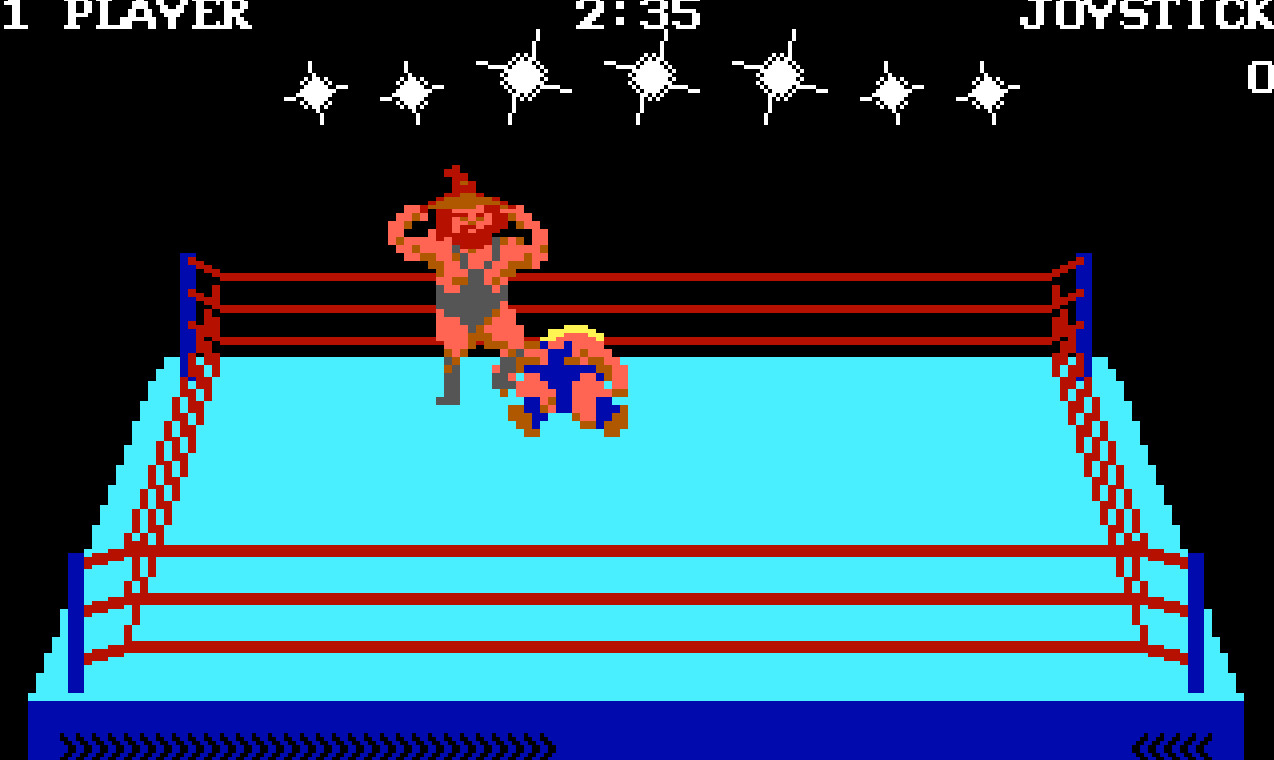
You're stepping into a one-on-one wrestling match stripped down to its basest form. The goal is simple: throw your opponent, pin him, don't get pinned yourself. The ring is a narrow strip of pixels, your wrestler is chunky, and the controls are direct. You press forward, backward, and a button to grapple. That's the mechanical skeleton. The game cycles through a handful of holds and throws, each one triggering animation frames that move in stutters and lurches. It's functional wrestling, nothing more.
The real encounter here is with how utterly stiff the whole thing plays. There's no rhythm to the grappling, no weight to the contact, no sense that these digital bodies are actually wrestling. You grab, something happens, then you're both standing again. The AI opponent doesn't telegraph much—he just acts, and you react. Victory comes down to repeating whatever worked the last time, then praying it works again. There's no elegance, no flow, no moment where you think, "That was clever." It's all rote mechanical hammering until someone stays on their back long enough.
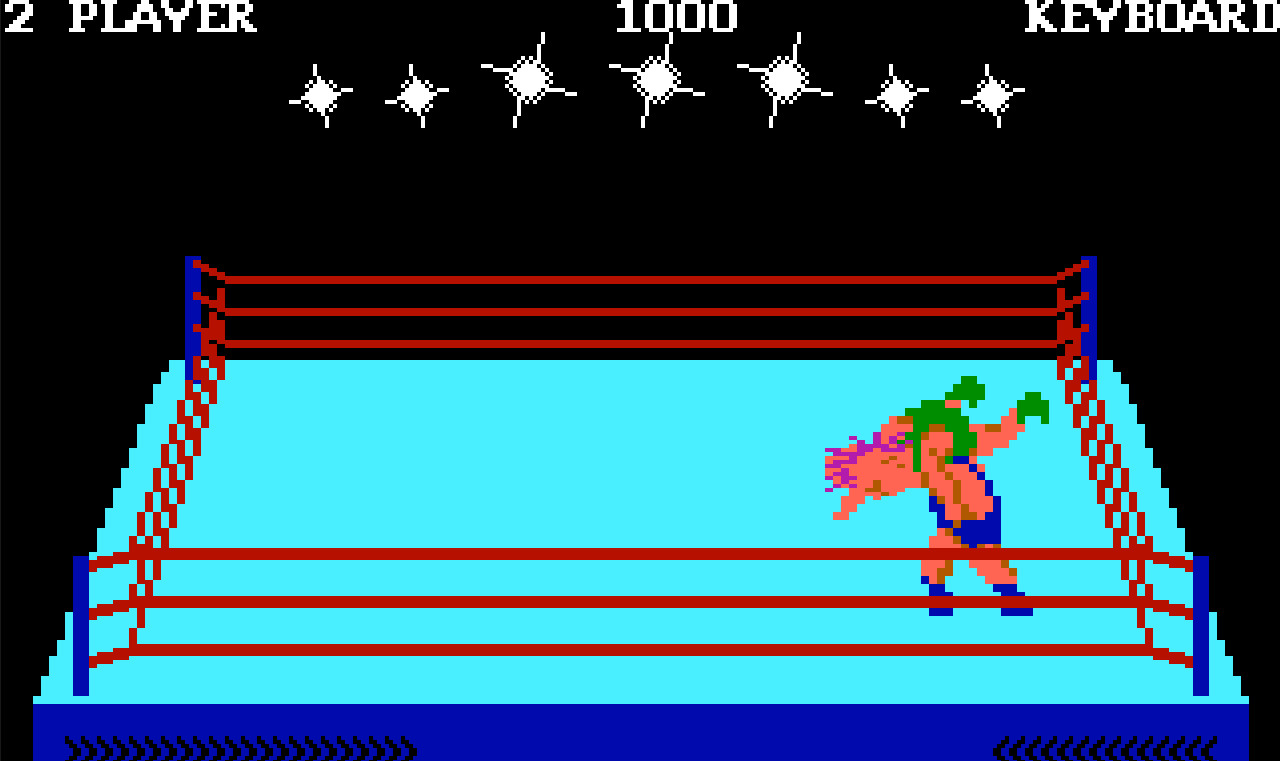
This was the mid-eighties, though, when wrestling games were still figuring out what they wanted to be. Rock'n Wrestle sits there as a snapshot of that uncertainty—competent enough to boot up and play through a match, ambitious enough to try multiplayer, but hollow enough that you'd rather watch someone else play it. The sport itself demands tension and narrative, and this game has neither. It's wrestling reduced to a turn-taking exchange, like a conversation where nobody's actually listening.
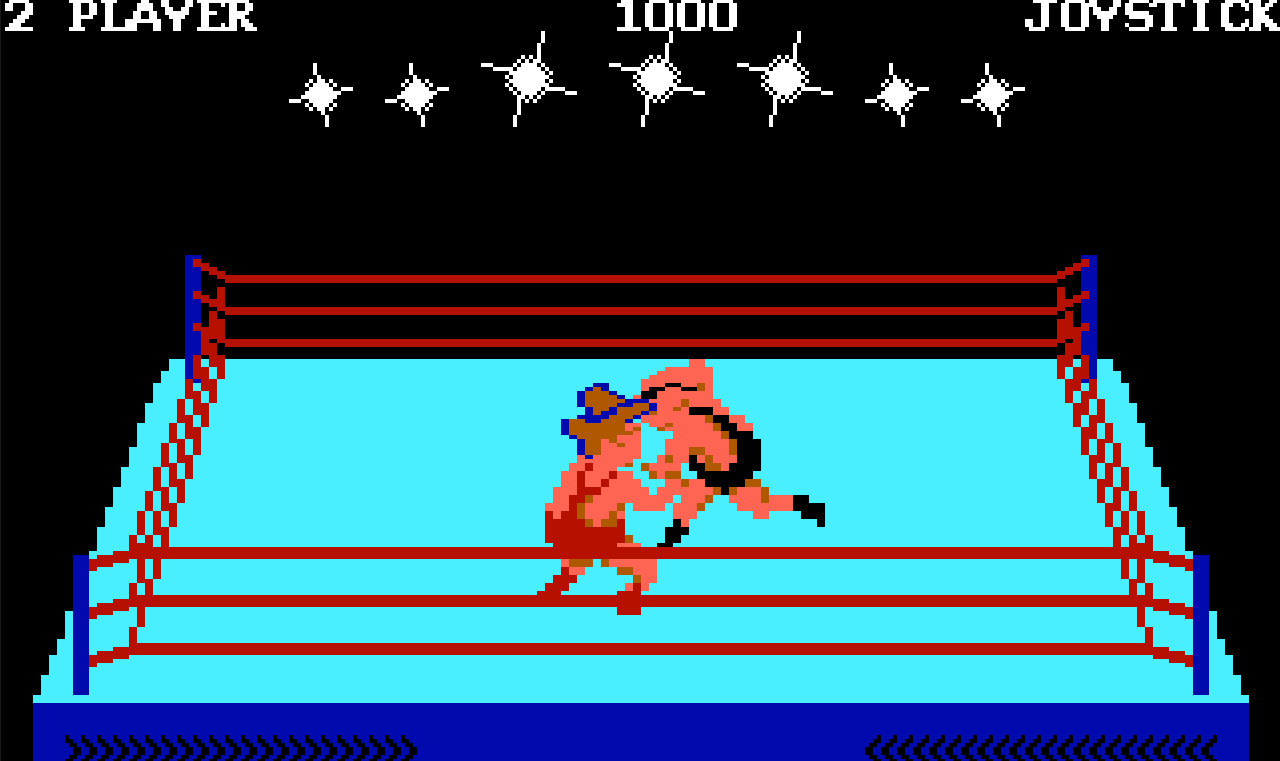
If you want a slice of how wrestling looked through a Commodore 64's eyes—or if you're morbidly curious about Australian shareware from the era—the browser version lets you dive in without commitment. Just don't expect it to grab you. It'll run its course, you'll win or lose, and you'll move on. That's not a failing, exactly. It's just how things were.
 old

 WWE Smackdown vs. Raw 2008 I'm A High Flyer T-Shirt广告在 eBay 查看 »
 Mattel WWE Elite Ultimate Warrior as Blanka Street Fighter广告在 eBay 查看 »
 WWE 2K18 Autographed Framed Photo Display w/ 2017 Royal广告在 eBay 查看 »
 WWE Ric Flair 2K19 Edition commemorative plaque & authentic广告在 eBay 查看 »
 WWE 2K16 Shirt - Never Worn广告在 eBay 查看 »
 2k 14 wwe the Rock / Labron James 28x22 Poster Double Sided广告在 eBay 查看 »


