When a game appears with no publisher name and a translation dated last year, you know it's something mysterious. CaWaDo is exactly that kind of strange case—an unofficial English localization of something old that prowled around nineties disks as copied software without proper documentation.

It's a DOS puzzle action game with simple graphics where you control some character and solve tasks in individual levels. The game doesn't aim for story or dialogue—it's pure mechanism. You have a map, you have a goal, you have restrictions. Individual screens aren't large, but their design requires logic. Sometimes it's about collecting things, sometimes about getting through a simple obstacle without something cutting or knocking you down.
Controls are like old arcade—directions and an action button. Graphics is primitive in the sense that it doesn't try for anything more than being readable. Sound exists mostly as formality. Playing goes that way—you want to continue if the puzzles catch you, or you get bored once you realize the solution is always the same. The designer clearly had no interest in expanding the palette, so after a few levels you see what the rest of the game will look like.

CaWaDo has nothing that makes it famous or exceptional. It's not a reason for nostalgia, not an iconic design, no twist that would elevate it. It's an average puzzle game from an era when such things existed by the dozens and nobody cared about them. That it appears in translation today says more about how the internet salvages forgotten corners of digital culture than about the quality of the game itself.

It's worth playing only if you want to silently click through something for a while and don't mind the absence of entertaining surprises. It's not poorly made—it's just empty. On an emulator or in your browser you'll play through it quickly and forget, which in many cases isn't bad.
 old
 Worms 11.5" Super Sheep Plush w/ Sound广告在 eBay 查看 »
 1996 Worms SNES NES SEGA Game Boy Ad Sheet Framed Poster Ad广告在 eBay 查看 »
 Worms Armageddon Acrylic Stand In Set Limited Run CE N64广告在 eBay 查看 »
 Worms Armageddon 24" X 18" Poster & Pin Limited Run CE N64广告在 eBay 查看 »
 Worms 2 And A4 Promotional Long Double Sided Poster THQ广告在 eBay 查看 »






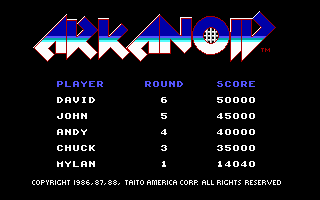 ▶Arkanoid1988MS-DOS / PC
 ▶Chess1998Sega Mega Drive
 ▶Boulder Dash III1986ZX Spectrum


