Этот обзор ещё не переведён — показываем оригинал (English).
1997. While the West was transitioning to polygons and 3D accelerators, somewhere in Korea a small studio called TG Entertainment was doing things their own way. Eojjeonji Joheun Il-i Saenggil Geot Gateun Je — a title that roughly translates to "A Night That Seems Like Something Good Might Happen" — never stepped beyond domestic borders. Which today places it in that strange category of games people know about but few have actually played.
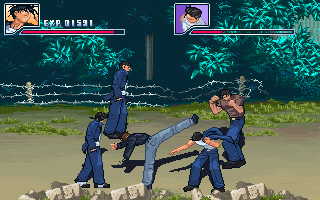
This is a side-scrolling beat 'em up in the tradition of a genre the mainstream was already abandoning. Double Dragon, Streets of Rage, Final Fight — it all seemed like the past. TG Entertainment either didn't know this or didn't care. Their game bet on street brawls in a Korean urban setting of the nineties, with characters and atmosphere that must have felt local and authentic back then — and today reads like a time capsule.
The mechanics are exactly what you'd expect from the genre: walk left and right, hit what moves, collect what lies around. Controls are straightforward, the combo system offers no depth to force you to learn anything. That's not necessarily a knock — the genre never pretended to chess-like complexity. The problem emerges if the game can't spice up this simple formula through level design, enemy variety, or at least solid feedback from the punch. How well TG Entertainment pulled this off is hard to judge today without spending serious time with it — but studios of similar size rarely transcended their template back then.
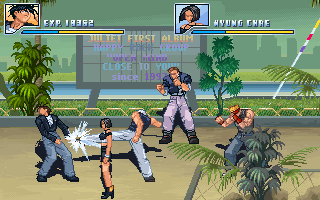
What I take away is more circumstance than content. 1997, DOS, Korean market, a genre written off as dead. Those are three things that normally spell erasure without a trace. Yet the game exists, someone preserved it, someone catalogued it. That alone says something about what the gaming scene looked like outside the Anglophone mainstream — full of titles that simply came into being, lived briefly on home markets, and vanished. Not every game had to be an export hit to matter.
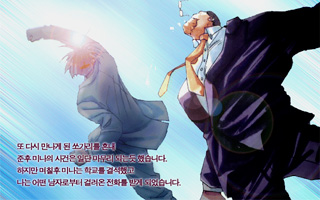
Today I'd recommend it to two types of people. First: curiosity collectors who want to see what a beat 'em up made by a small Korean studio at the tail end of the DOS era looked like. Second: no one else — if you're expecting refined action or technical sophistication that holds up next to Streets of Rage 2, you'll be disappointed. Eojjeonji Jeonyeok is interesting mainly as an artifact. And that's a legitimate reason to exist, even if perhaps not for extended playtime.
 old


 ▶Bubble Bobble1989MS-DOS / PC


