Этот обзор ещё не переведён — показываем оригинал (English).
Drop a block, watch it settle, and suddenly the grid snaps into focus like a puzzle that's been staring at you the whole time. Blox doesn't announce itself as anything special—it's a quiet 1991 DOS game that borrows Tetris's gravity and Klax's spatial logic, then strips away the flashiness to leave just the thinking.

The concept is straightforward enough that it hurts: colored blocks fall from the top, you position them on the playing field, and when you complete a horizontal line, it vanishes. No rotations, no frantic button-mashing—you've got directional control and that's it. The pieces are stubborn things, oversized and awkward, designed to make you plan two moves ahead instead of one. It's the kind of game that looks simple in screenshots and reveals its teeth after ten minutes.
What makes Blox tick is the friction between simplicity and consequence. Every block lands exactly where you tell it to, which means every mistake is yours alone. There's no excuse, no "the rotation didn't register." You either saw the gap or you didn't. The game doesn't punish speed—it punishes carelessness. Stack blocks poorly and the screen fills from the bottom up, and there's something almost meditative about watching your options narrow because you got comfortable two levels ago.
Visually, it's DOS-era ascetic: flat colors, chunky pixels, beeps instead of music. The game doesn't bloom or sparkle; it just sits there and makes you think. Some will find that refreshing. Others will boot it up, fiddle with a few pieces, and leave, bored by the lack of juice. That's fair. Blox has no personality to lean on, no story hook, no character to root for.
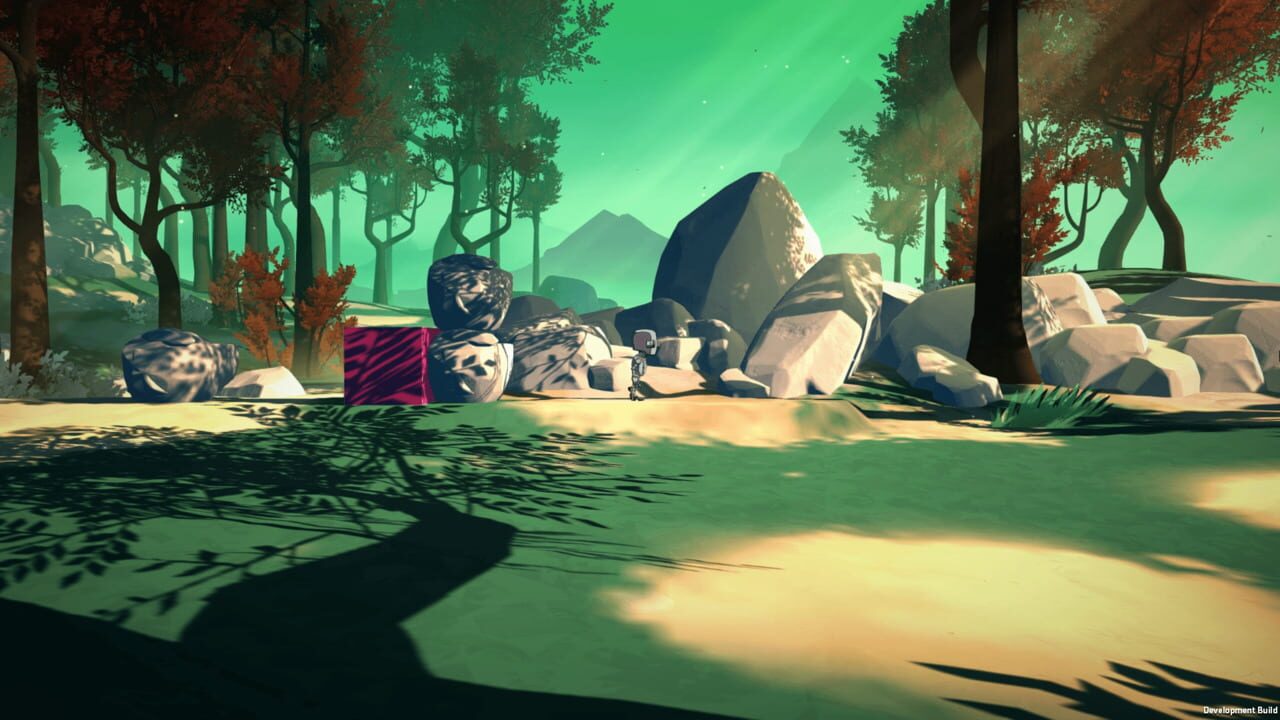
But there's weight to what Blox offers. It's a game about spatial reasoning and pattern recognition dressed in the thinnest possible skin. Play it today and you'll notice how much modern puzzle games need to distract you with animations and sounds and narrative sugar. Blox just sits there, waiting, asking if you've actually learned to see the board or if you're just going through motions. That's either its greatest virtue or its fatal flaw, depending on whether your brain craves that kind of austere challenge or if it needs a little more warmth to keep going.
 old


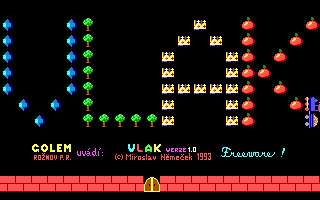 ▶Vlak1993MS-DOS / PC

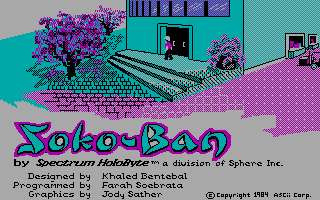 ▶Sokoban1984MS-DOS / PC


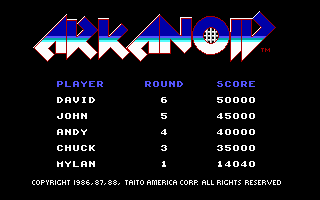 ▶Arkanoid1988MS-DOS / PC
 ▶Chess1998Sega Mega Drive
 ▶Boulder Dash III1986ZX Spectrum

