این نقد هنوز ترجمه نشده است — متن اصلی (English) را نشان میدهیم.
When you say Sensible Soccer, an old-school gamer pictures graphics that look like they were drawn by a feverish mathematician. That's exactly where the magic lies — pixelated caricatures of footballers grip the ball as if they had magnets in their boots, and yet the game's perspective is so detailed that I still remember every player's position from back then.

The game originally came out in the mid-nineties for various platforms, but the Mega Drive version brings football in its purest form. It's not a simulator — it's arcade action, where victory is born from precise timing and system knowledge. Your team runs across the field according to rules that work, but don't answer to reality. A pass at the moment when your opponent is just a few pixels from your foot? It lands based on how the game calculates the angle. A shot from a position that seems hopeless? Suddenly it's flying into the top corner.
The controls look simple — arrows for movement, buttons for passes, shots, and free kicks. In reality, though, you spend entire hours learning when to check the score, when to mind your defense, and when to risk it all. Zero guides, zero tutorials. Either you catch the logic, or you're kicking off from the center spot. That's exactly why I keep coming back to it — it's not nostalgia, it's an honest challenge wrapped in graphics that would fit on a floppy disk.
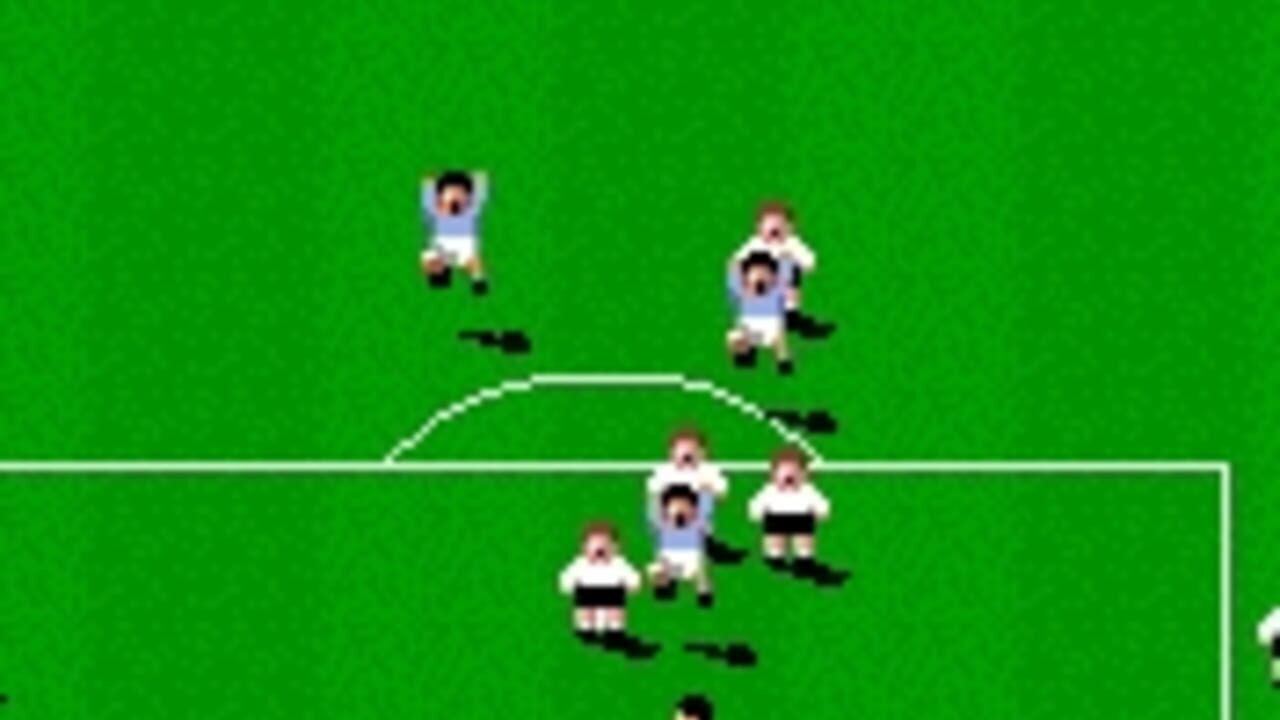
Today there are football games with such realistic player models that you know the footballer's name just by how he looks. Sensible Soccer couldn't care less about any of that. Yet those very limitations made it a legend. There's no animation that would make the game feel condemned to some archive bin. Computer and player follow the same rules — and you can't ask for more from eighties microcomputer software.

You'll come back to it if you love football without the fluff and want to feel what an arcade celebration looked like in a time when fifty-year-old boots were worn to school without shame. You'll find it in your browser or on a Mega Drive emulator without much searching — and before you get used to it, you'll go through a string of losses. Then you'll master it, and nothing else will bite you again.
 old


 ▶European Club Soccer1993Sega Mega Drive
 ▶Sampras Tennis 961995Sega Mega Drive
 ▶NewFútbol Argentino '98: Pasión de Multitudes1998Sega Mega Drive
 ▶NBA Action '941994Sega Mega Drive
 ▶NewFútbol Argentino '961996Sega Mega Drive
 ▶Brian Lara Cricket1994Sega Mega Drive
 ▶IMG International Tour Tennis1994Sega Mega Drive
 ▶Total Football1995Sega Mega Drive
 ▶NFL '951994Sega Mega Drive
 ▶Pro Striker Final Stage1995Sega Mega Drive
 ▶Coach K College Basketball1995Sega Mega Drive


