این نقد هنوز ترجمه نشده است — متن اصلی (English) را نشان میدهیم.
Who should you be in the year 2400? According to this civilization strategy game, someone with an eye for detail who cares about steel and ammunition production. 2400 AD is a computer strategy from the late eighties that takes a world map, hands you a nation, and says: it's yours. Build your empire, trade, wage war, or pursue technological supremacy. There's no opening sequence or video, just tables, numbers, and endless menus.
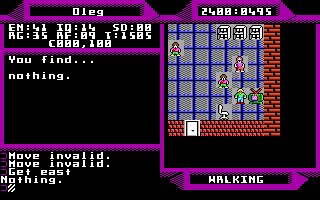
It's a turn-based strategy in the classic style—you and the computer take turns planning your moves. You've got several nations to choose from, each with its own strengths and weaknesses. Regardless of your pick, you'll be managing resources—ore, food, military supplies. The economy is the heart of the game. You decide what gets produced, what gets traded, how labor is allocated. Once you've got the cash and supplies, you build units and send them into battle. That's the second pillar of strategy—soldiers, tanks, aircraft, each with their own effectiveness.
Controls work through menus and coordinates. Slow going. The graphics are purely text-based, with the occasional basic raster map. Sound? More like the absence of sound. This isn't a game that'll hook you with dynamism or flash—it's cerebral stuff. If you love spreadsheets and calculations, you'll be grinding through the night. If you want action, go play something else.
Back in the eighties, this was a solid choice for the strategy genre. The computer played at a respectable level, not insanely, so you had a fighting chance. In hindsight, you can see how strategy evolved—from these bare-bones tables to the polished later productions like Civilization. 2400 AD isn't groundbreaking, but it's functional and honest about what it promises.
Today it's mainly an archive piece. You can play it in DOSBox, and if you're curious what strategy looked like when battles weren't animated on screen, it's worth the time. Don't expect flashy thrills, but if you've got the patience for a turn-based game from an era when graphics meant abstraction, you'll find a quiet satisfaction in the primal joy of planning and victory.
 old


 ▶Sid Meier's Civilization1991MS-DOS / PC


 ▶Chess1998Sega Mega Drive


